Frozen Pipe Cleanup in Newport, RI
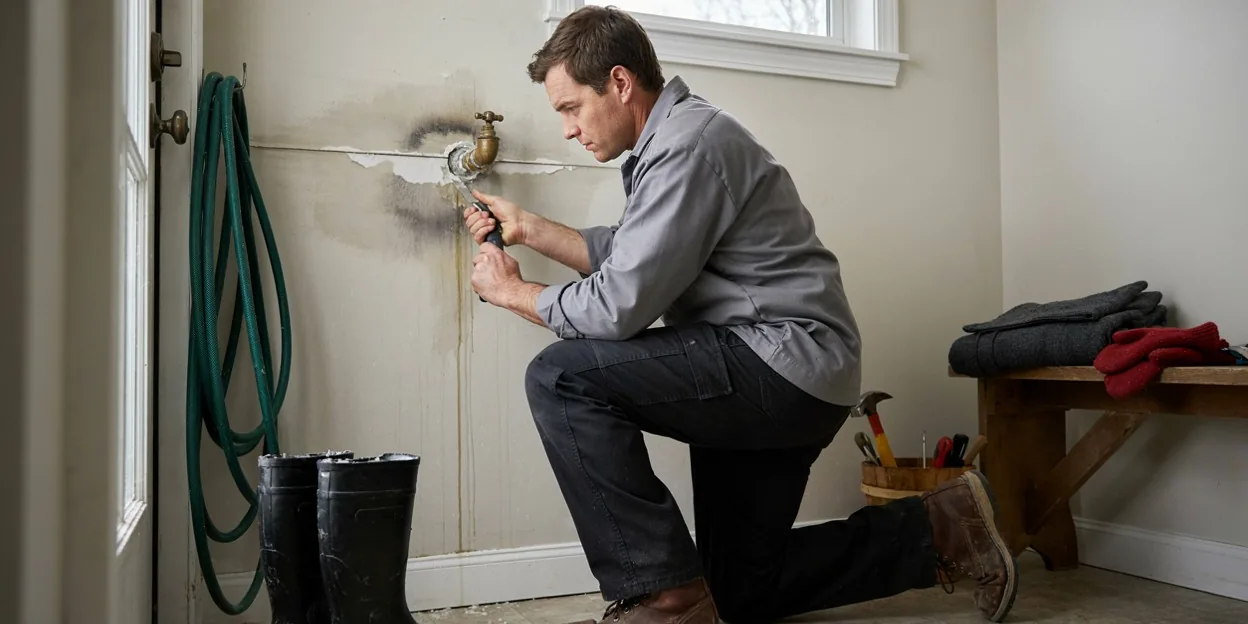
The Ocean Drive house was closed up after Columbus Day with the heat at 50, and nobody went in until the caretaker stopped by in February. The kitchen line in the north wall had frozen during the cold week in January, split, and thawed, and the water had run for days through the kitchen floor into the cellar and across it. This site puts you through by phone to an independent local provider who cleans up after frozen pipes in Newport and across Newport County.
Figuring out how many days the wall has been wet
Ice in a split line acts as its own plug, so the leak starts with the thaw, not the freeze, and the thaw can come a day or a week after the cold breaks. The crew's first question is when the water was found and when the temperature came up, because that gap says how long the framing has been soaking. Then they confirm the main is off, pump out standing water, and meter the wall on both sides of the split, the floor under it, and the cellar timbers under that.
Frozen-pipe losses start in the coldest places in an old house: an outside wall with no insulation behind the plaster, a crawl space under a rear addition, a kitchen line run along a north wall in a 1920s remodel, or the unheated end of a summer house.
Shut the main, bring the heat up slowly, leave the torch alone
Close the main at the front foundation wall and keep it closed until a plumber has found the split, because a second frozen section often lets go as the house warms. Turn the heat up. Open the doors on cabinets against outside walls so warm air reaches the pipes. Do not use a torch or a heat gun on a pipe inside a plaster wall. Move what you can away from the wet wall, photograph the wall and the floor, and make the call. The plumber repairs the pipe, and the cleanup crew dries the house.
What dries in the wall and what comes out of it
Studs and sill plates in an old wall usually dry where they stand if equipment reaches them inside a few days. Horsehair plaster over lath on the wet wall is metered and often dried from behind through small openings rather than torn out. If someone stuffed insulation into that wall during a later renovation, it almost always comes out, because it held the water against the studs the whole time. Wide pine floors under the split are dried in place if they have not cupped. A cellar floor under all of it dries once the water is off it. After the wet material is out, structural drying runs until the readings say done.
Water that ran from a split upstairs down through a plaster ceiling adds a ceiling water damage repair to the job, and a cellar that filled from above gets the same treatment as a stone cellar flooding cleanup.
Where Newport County houses freeze
Newport winters are milder than inland Rhode Island because of the water on three sides, and that is exactly why the houses are not built for cold. Colonial and Victorian walls here are plaster on lath over studs with nothing in the cavity, and a supply line run through one freezes on the first week the wind holds out of the northwest below 15 degrees. Gilded Age houses on Bellevue Avenue and Ocean Drive were summer houses, built to be left, and many still have plumbing runs in unheated wings. Cottages at Sakonnet Point, Common Fence Point, and Touisset were never meant to be heated at all.
Houses that sit empty are the classic case. A thermostat at 50 keeps the front rooms fine and the pipe in the north wall frozen. If you leave for the winter, have the plumbing drained or shut the main and open the faucets, and have someone walk through after every cold snap. The two-week cold stretch that ran from the day after Christmas 2017 into the first week of January 2018 split pipes in shut-up houses all over Aquidneck Island.
Most homeowner policies treat a split pipe as a sudden loss, but some handle a frozen pipe in an unheated or unoccupied house differently, and some expect proof that the heat was left on. This site cannot say what yours does. Have the crew record the discovery date, the first readings, and the photos so the timeline reaches your adjuster on paper.
Calling about a line that froze in a Newport wall
Tell us which wall or room the water showed up in, whether the main is closed, and whether a plumber is on the way. Mention if the house was empty and for how long, and whether the water reached the cellar. Call (401) 560-5802.