Storm Surge and Coastal Flood Cleanup in Newport, RI
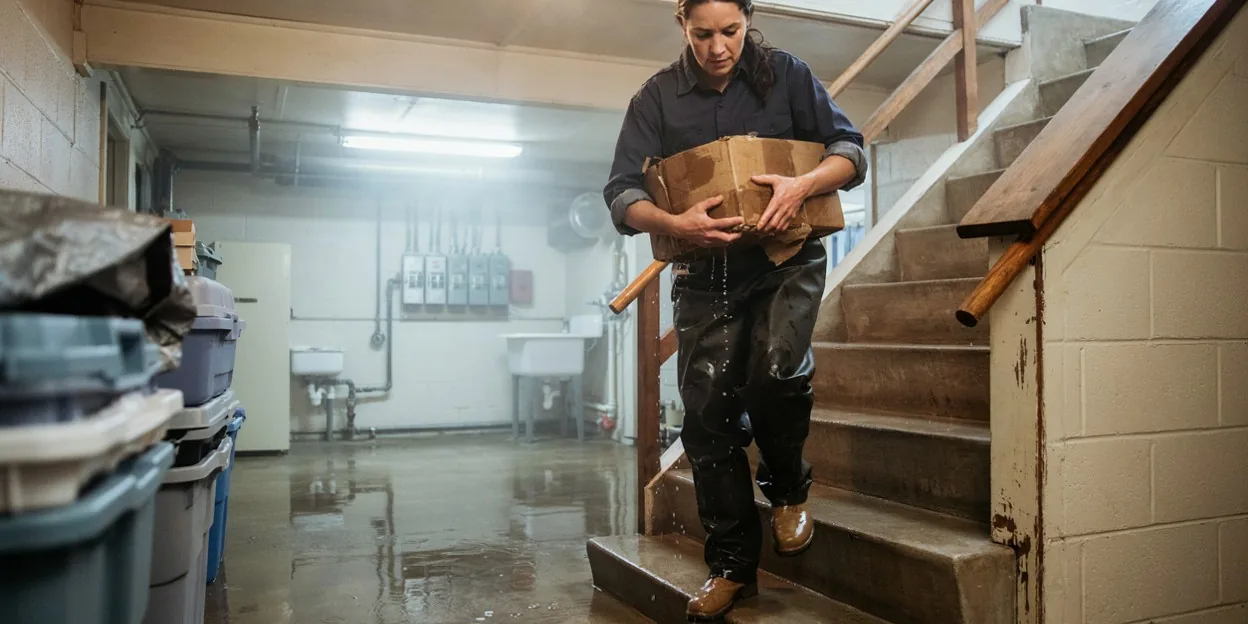
The nor'easter peaked at the top of a full-moon tide, and for two hours Wellington Avenue was part of the harbor. When the water pulled back it left a foot of it in your cellar, a line of seaweed on the porch steps, and the smell of low tide in the front hall. This site puts you through by phone to an independent local provider who cleans up after storm surge and coastal flooding in Newport and across Newport County.
Treating sea water as the contaminated water it is
Water that came over the seawall is not rainwater. It carries salt, fuel from the harbor, and whatever the storm drains gave back when they surcharged. So the crew's first decision is not how to dry the cellar but what has to leave it. Standing water is pumped out. Anything porous the salt water touched, including carpet, pad, cardboard, upholstered furniture, and the bottom foot of drywall or paneling, is removed and bagged rather than dried in place. Hard surfaces the water reached are cleaned and disinfected before any drying equipment goes in.
Then the crew meters what is left: the sill, the joists, the stone, and the base of the ground-floor walls. Salt water in old wood dries slowly and pulls moisture back later, so the readings are taken more than once.
Getting back into the house safely after the tide drops
Do not go into a flooded cellar until the power to it is off, and if the panel is down there and wet, wait for the utility or an electrician. Keep children and pets out of any room the sea water reached. Open windows if the weather allows. Do not run the furnace or the boiler if the water reached them. Photograph the water line on the outside of the house, on the cellar wall, and on the stairs before anything is moved, because the flood adjuster will want the height. Then make the call and say plainly that the water came from the harbor or the bay.
What the salt water takes and what the house keeps
Stone, brick, and old framing usually stay. They are cleaned, metered, and dried. Modern finishes on the ground floor of an old house, such as laminate, carpet, and drywall added in a 1980s renovation, usually come out. Original wide boards are a judgment call the crew makes with a meter, since a floor that has been under sea water for hours may cup even if it dries. Appliances and mechanicals that sat in salt water are checked by a tradesman before anyone plugs them back in. After the removal and cleaning, structural drying runs until the readings hold.
A cellar that took surge on top of its usual spring groundwater is also a stone cellar flooding cleanup, and the crew looks at the bulkhead and the floor drain as part of the same visit.
Newport's record of water coming ashore
The hurricane of September 21, 1938 pushed 12 to 15 feet of surge into Narragansett Bay, put Thames Street under water, and destroyed 19 lives and most of the houses at Island Park in Portsmouth. Hurricane Carol on August 31, 1954 arrived with 115-mile-an-hour winds, flooded Thames Street again, and swept away the Easton's Beach carousel. Hurricane Bob made landfall over Newport on August 19, 1991 with a surge of five to eight feet. Sandy on October 29, 2012 wrecked the Cliff Walk and flooded downtown streets. Between them, nor'easters on a spring tide put water on Washington Street on the Point and along Wellington Avenue in the Fifth Ward more winters than not.
The Point, downtown, and the Fifth Ward in Newport, Island Park and Common Fence Point in Portsmouth, and the Atlantic Beach district in Middletown are the neighborhoods that flood first. Homeowner policies do not pay for sea water. Flood insurance through the national program does, if you carry it, and it pays on the water line and the adjuster's file. Have the crew photograph the line and log the readings before removal starts.
Calling after the harbor came inside
Say how high the water reached inside and outside, whether it is still standing, whether the power is off, and whether the furnace or boiler sat in it. Mention a stone cellar or a finished ground floor. Call (401) 560-5802.